-
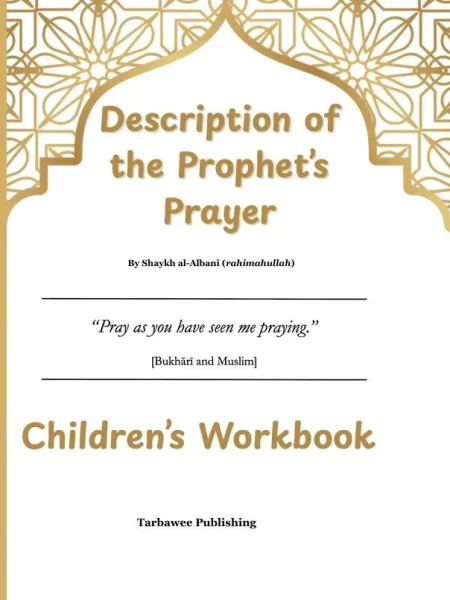
This children’s workbook is designed to accompany Description of the Prophet’s Prayer by Imam Muhammad Nasir al-Din al-Albani (rahimahullah). The workbook follows the book step by step, with questions arranged in sequential order to help readers reflect and retain the key rulings of the prayer.
In addition to the guided questions, the workbook also includes extra beneficial lessons at the end covering important topics such as Wudu, Tayammum, and Sujood as-Sahw, making it a well-rounded resource for learning about salah.
Clear, engaging, and practical, this workbook can be used by children, homeschooling families, Islamic schools, or even adults seeking a more interactive and hands-on way to review the essential rulings of salah. It is a valuable tool for building understanding and strengthening the practice of prayer for learners of all ages.
-

This handbook presents a side-by-side translation of the Arabic text of Hafidh al-Nawawi’s Forty Hadith, which is based upon three manuscripts.
-


The treatise in your hands is a short and concise, yet informative and comprehensive treatment of the affair of worship (‘ibadah).
-

Islam has boundaries and outer limits which are clearly defined in the Qur’an and Prophetic traditions. A Muslim can leave Islam through certain beliefs, statements and deeds which exceed the boundaries, clash with the foundations of Islam, invalidate it, and can never be reconciled with it.
-

The four rules in this brief treatise are derived from the texts of the Qur’an and the Sunnah and from knowledge regarding the state of the Arabs in the era of the author. They comprise mighty principles and protect the one who memorises them and learns their meanings.
-

This is a small treatise from Shaykh al-Islam Muhammad bin ‘Abd al-Wahhab (may Allah have mercy on him) concerning six mighty principles of the religion of Islam.
-

The Primary Factors Contributing to The Weakness of The Ummah & The Solutions To Overcome Them
$7.00 Add to cartIn this remarkable treatise by the virtuous Salafi Imam ‘Abdul-‘Aziz Ibn Baz (may Allah’s mercy be upon him) he tackles a pressing issue that is as evident as the midday sun within the Ummah: the factors contributing to our weakness and inability to stand firm against adversaries.
-


The Danger Of Innovated Principles Upon Methodology & Creed By Shaykh Hasan al-Mardawi
$14.00 Add to cart -
-
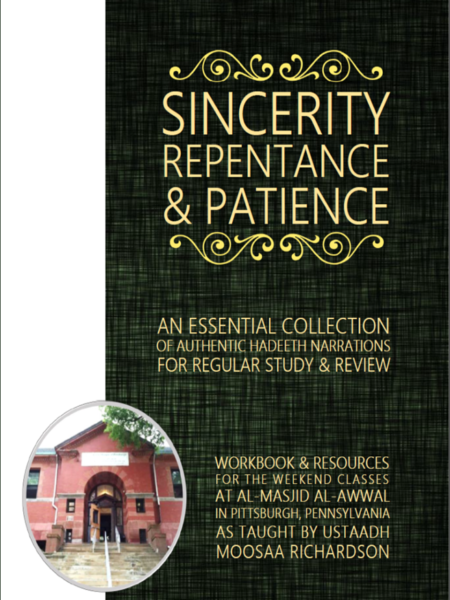
Sincerity, Repentance, and Patience: An Essential Collection of Authentic Hadeeth Narrations for Regular Study and Review
$20.00 Add to cartNOT for unassisted self-study, this is the official workbook for the weekly class at al-Masjid al-Awwal (live in Pittsburgh or online from anywhere). This is literally a $20 ticket to over TWO YEARS of weekly classes, in shaa’ Allah, thoroughly engaging and packed with solid academic benefit and touching reminders! Classes are taught live from this workbook, broadcast worldwide. No registration is required. No fees. Simply get the workbook and follow along from wherever you are. All previous lessons, high-quality and professionally mastered, are available on 1MM’s (free) Spreaker Channel here:
-
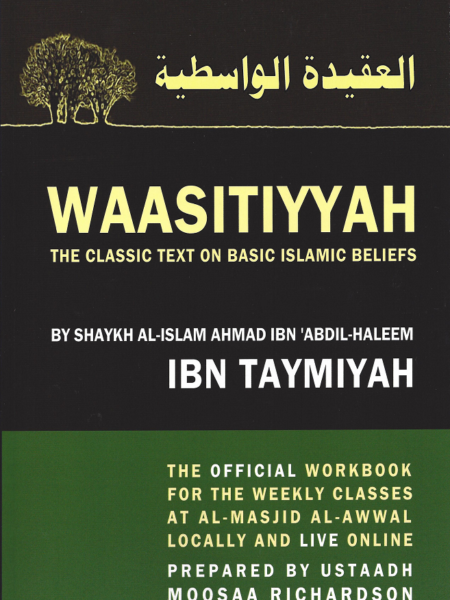
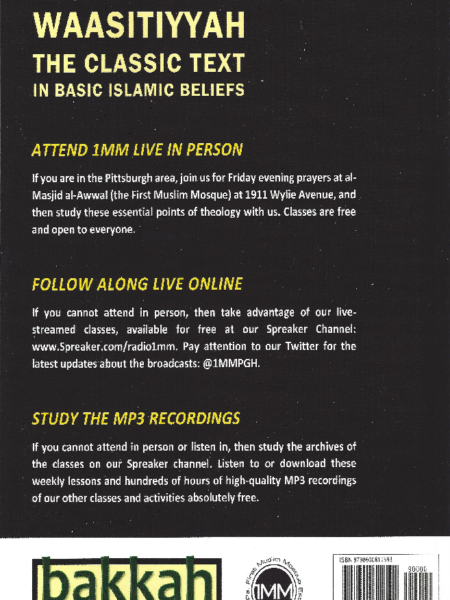
WAASITIYYAH: The Classic Text on Basic Islamic Beliefs
The official workbook for Friday night classes at al-Masjid al-Awwal in Pittsburgh, and everywhere else through our online broadcasts. These classes are broadcast live for free. Then, high quality edited MP3 recordings replace the live versions, and you can download and listen at your convenience, in shaa’ Allah, from this link: https://www.spreaker.com/show/waasitiyyah-basic-muslim-creed
This workbook includes the fully-voweled Arabic text of Waasitiyyah and its English translation by Moosaa Richardson, split up over 100 lessons, a complete Arabic manuscript of the text, an isnaad (chain of transmission) back to Shaykh al-Islam Ibn Taymiyah, as well as the complete uninterrupted text of Waasitiyyah, the Arabic original, as wall as the English translation.
-


-
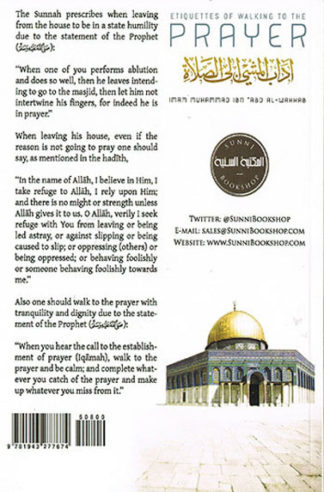
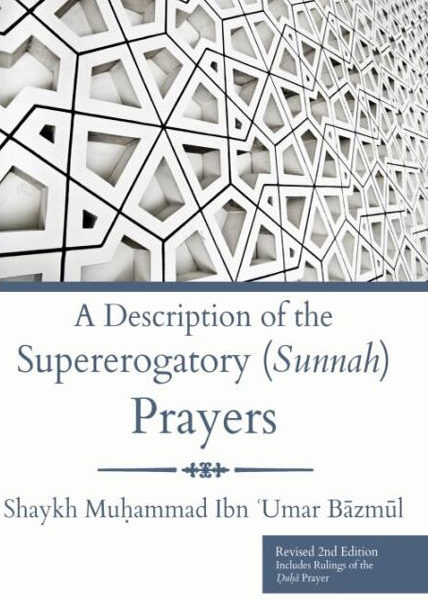
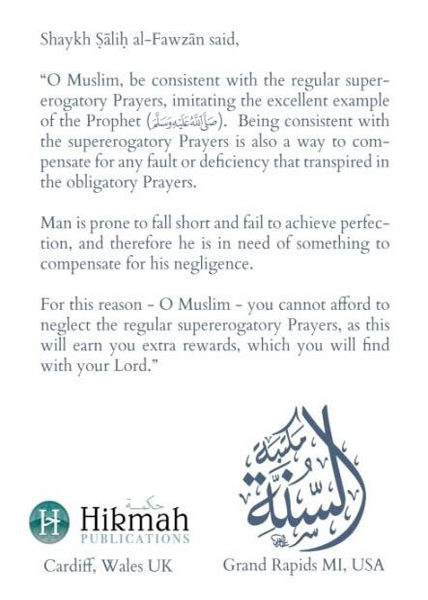
It is the Sunnah to go to the prayer in a state of purification and humility. This is based upon his statement (ṣallallāhu ʿalayhi wa-sallam):
“When one of you performs wudū’ and does it well, then goes out heading to the Masjid, let him not interlace his fingers, for he is in a state of prayer.” -
-

-
Cart
Login
Register